Leave Your Message
Choosing Road Bollards for global projects is not a simple matter of comparing heights, finishes, or unit prices. A bollard beside a busy airport entrance faces different demands from one protecting a historic plaza. Designers must connect security goals, pedestrian movement, vehicle types, climate, maintenance access, and local construction practices. The right decision begins with evidence, not attractive product images. Site observations, traffic records, drainage conditions, and verified supplier data provide a more dependable foundation.
Experienced project teams usually classify the required protection level before selecting materials or operating systems. Fixed steel bollards may suit a permanent perimeter, while removable or retractable models can preserve service access. Stainless steel can perform well in coastal settings, but its grade, weld quality, and installation details still matter. In cold regions, trapped water and freezing cycles may damage poorly drained foundations. In hot, dusty locations, motors, seals, and controls need realistic inspection plans. Independent impact testing and documented performance should support important claims. Local engineers should also review foundations, visibility, accessibility, emergency routes, and relevant standards.
Global procurement adds another layer of uncertainty. Shipping dimensions, spare-part availability, language, training, and response times can influence lifetime cost more than the purchase price. Ask who will inspect the bollards five years later. That answer matters. No selection is perfect, and early assumptions may prove wrong after opening the pavement. A practical review process leaves room for testing, redesign, and honest reporting. This guide examines how to compare Road Bollards with professional judgment, field experience, and respect for the people who use each protected space.
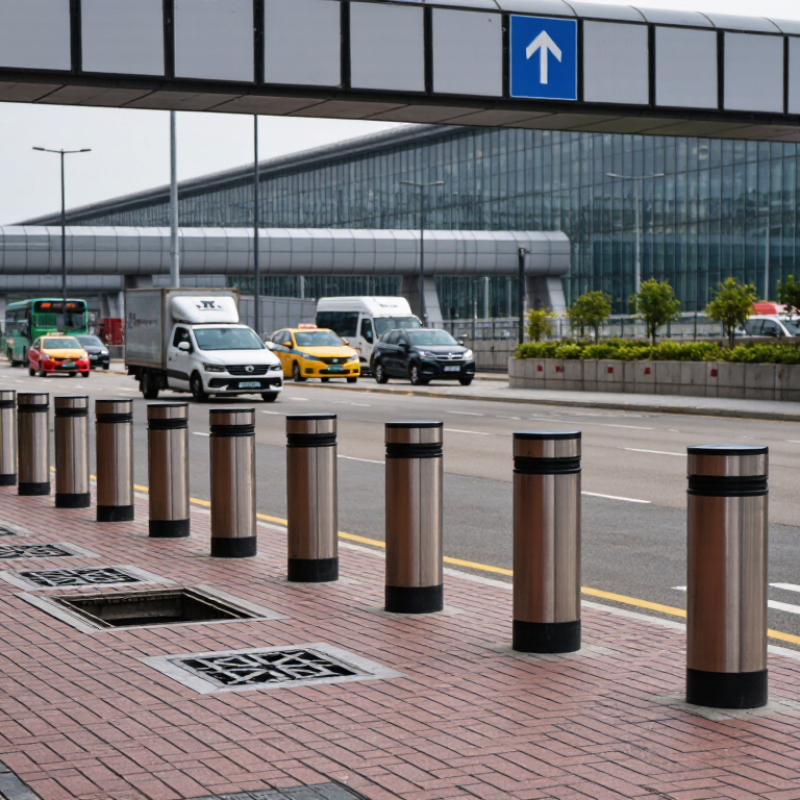
Road bollards serve different purposes, so selection should begin with their core function. Fixed bollards provide permanent protection around sidewalks, entrances, and building edges. Steel models resist repeated impact, while concrete units offer strong stability but require heavier foundations. Removable bollards suit service lanes, emergency access, and event areas where routes change. Retractable bollards control vehicle entry without permanently blocking pedestrians.
Flexible bollards mainly guide traffic and mark lanes. They bend after minor contact, reducing repair needs and protecting vehicle bodies. They are not a substitute for crash-rated protection. Security bollards use stronger posts, deeper anchoring, and carefully tested foundations. Their performance depends on more than the visible tube. Soil conditions, drainage, installation depth, and vehicle approach speed matter greatly.
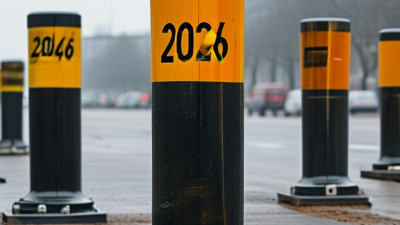
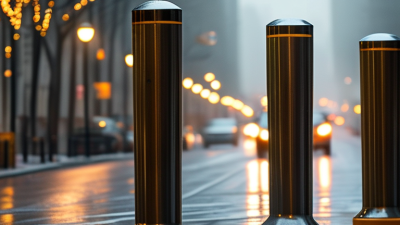
Visibility also affects safety. Reflective bands, contrasting colors, and suitable height help drivers notice bollards during rain or at night. In hot regions, finishes must resist ultraviolet exposure. In coastal locations, corrosion protection deserves close attention. A dark finish may look refined, but it can disappear beside wet asphalt. Field teams should check spacing with wheelchairs, delivery carts, and maintenance vehicles, not only drawings. I have found that attractive layouts sometimes create awkward turning points. That detail deserves another review. A practical choice balances protection, access, local weather, installation limits, and long-term maintenance.
| Road Bollard Type | Typical Construction | Core Function | Typical Applications | Visibility and Safety Features | Installation Method | Impact and Security Role | Key Selection Considerations |
|---|---|---|---|---|---|---|---|
| Fixed Steel Bollard | Steel tube or fabricated steel post, commonly protected with paint, powder coating, galvanizing, or another corrosion-resistant finish. | Provides permanent separation between vehicles and pedestrians, buildings, equipment, or restricted areas. | Building perimeters, sidewalks, loading zones, parking entrances, public squares, and traffic islands. | High-visibility paint, reflective bands, contrasting colors, and illuminated caps can improve recognition in low-light conditions. | Usually anchored into a concrete foundation with a below-ground mounting depth determined by the design and site conditions. | Offers dependable access control and can provide vehicle resistance when engineered, installed, and tested for the required threat level. | Consider required spacing, foundation depth, local soil conditions, corrosion exposure, post diameter, wall thickness, and the expected vehicle threat. |
| Removable Bollard | Detachable steel or stainless-steel post fitted into a ground sleeve or receiving socket. | Allows a normally restricted route to be opened temporarily for emergency, maintenance, delivery, or event access. | Pedestrian streets, service roads, emergency lanes, parks, plazas, and temporary traffic-control points. | Reflective markings and a clearly visible sleeve cover help reduce trip hazards and improve nighttime recognition. | Installed in a permanent socket; the post is manually lifted out and stored when access is required. | Provides moderate access control. The security performance depends on the post design, locking arrangement, socket, and foundation. | Evaluate removal frequency, storage requirements, locking security, lifting weight, drainage, and the risk of unauthorized removal. |
| Retractable or Automatic Bollard | Steel or stainless-steel rising post operated by hydraulic, pneumatic, electromechanical, or manual mechanisms. | Controls vehicle access while maintaining a clear route when the bollard is lowered. | Controlled entrances, government facilities, commercial sites, transport facilities, private roads, and high-security perimeters. | Reflective bands, LED lighting, audible or visual status indicators, and traffic signals can support safe operation. | Requires an engineered below-ground chamber, drainage, power or control cabling where applicable, and access for maintenance. | Can provide regular or high security depending on the tested model. Not every automatic bollard is designed to stop hostile vehicle impact. | Check cycle frequency, emergency lowering, power-failure behavior, drainage, controller compatibility, maintenance access, and local electrical requirements. |
| Flexible Polymer Bollard | Flexible polyurethane, thermoplastic, or similar resilient material, often mounted on a steel or polymer base. | Improves lane guidance and traffic visibility while reducing damage from minor vehicle contact. | Road edges, parking areas, cycle lanes, temporary work zones, traffic islands, and channelization points. | Usually supplied in high-visibility colors with reflective bands or reflective panels. | Surface-mounted with anchors or installed using a base plate, depending on the design. | Designed for visibility and repeated deflection rather than hostile vehicle mitigation or rigid perimeter protection. | Consider rebound behavior, ultraviolet exposure, temperature range, snowplow risk, anchor durability, and replacement requirements. |
| Concrete-Filled Steel Bollard | Steel outer sleeve or pipe filled with concrete, sometimes reinforced with internal steel components. | Combines physical separation with increased mass and rigidity for demanding vehicle-control locations. | Warehouse fronts, utility areas, fuel infrastructure, loading docks, industrial sites, and building protection zones. | Protective coatings, reflective bands, high-visibility paint, and optional covers improve recognition and weather resistance. | Typically fixed into a reinforced concrete foundation; foundation design must account for impact loads and soil conditions. | Can provide strong resistance to accidental vehicle contact. A certified hostile-vehicle rating requires a tested system, not merely a concrete-filled post. | Assess impact energy, foundation design, drainage, corrosion protection, repairability, clearance from structures, and required testing documentation. |
| Stainless-Steel Architectural Bollard | Stainless-steel tube or fabricated shell, commonly with brushed, polished, or satin finishes. | Provides pedestrian protection and access definition while complementing architectural surroundings. | Hotels, retail areas, airports, public buildings, campuses, promenades, and landscaped developments. | Contrast bands, reflective inserts, tactile details, and integrated lighting can improve accessibility and nighttime visibility. | Available as fixed, removable, or surface-mounted units, depending on the project requirements. | Primarily selected for appearance and pedestrian segregation unless the specific model is structurally engineered and impact tested. | Consider stainless-steel grade, chloride exposure, finish maintenance, vandal resistance, accessibility guidance, and compatibility with nearby materials. |
| Cast-Iron or Decorative Bollard | Cast iron, ductile iron, steel, or cast aluminum with decorative profiles and protective coatings. | Defines pedestrian areas and contributes to streetscape character while discouraging casual vehicle entry. | Historic districts, parks, town centers, heritage sites, promenades, and civic landscapes. | Contrasting finishes, reflective collars, and supplemental lighting may be needed because dark decorative surfaces can be difficult to see at night. | Usually surface-mounted or fixed into a concrete foundation; removable versions are also available. | Generally offers low to moderate vehicle resistance unless specifically reinforced and tested for impact performance. | Review heritage requirements, fracture behavior, coating durability, visibility, vandal resistance, local climate, and replacement availability. |
| Traffic Delineator Bollard | Flexible plastic, rubber, polymer, or lightweight composite body with a weighted or anchored base. | Guides drivers, marks hazards, separates traffic streams, and communicates temporary or permanent road geometry. | Lane merges, roadworks, roundabouts, parking facilities, construction zones, and temporary diversions. | High-visibility orange, red, white, or yellow colors with retroreflective bands are commonly used for daytime and nighttime recognition. | May be portable, surface-mounted, weighted, or anchored, depending on the duration and severity of the traffic arrangement. | Intended for traffic guidance rather than security. It normally yields or deflects during vehicle contact. | Check compliance with local traffic-control regulations, retroreflectivity, wind stability, ballast weight, temperature performance, and replacement cost. |
| Certified Vehicle-Security Bollard | Engineered steel or composite barrier system with a designed post, foundation, anchorage, and controlled installation configuration. | Mitigates unauthorized vehicle intrusion at locations requiring a defined level of hostile-vehicle protection. | Critical infrastructure, transport hubs, public venues, government sites, high-value facilities, and protected perimeters. | Reflective markings, lighting, warning signs, and controlled approach geometry help support safe operation and detection. | Requires a foundation and installation arrangement matching the tested configuration; site-specific engineering is essential. | May be evaluated under vehicle-impact standards such as ASTM F2656 or IWA 14-1, where the test scope and rating are explicitly documented. | Confirm vehicle type, impact speed, approach angle, penetration distance, test standard, foundation conditions, maintenance plan, and certification scope. |
Note: Vehicle-impact performance depends on the complete installed system, including the bollard, foundation, anchorage, spacing, and site conditions. A product should not be treated as impact-rated unless the applicable test documentation and installation requirements are available.