Leave Your Message

10 Best Cylinder Fenders for Global Buyers in 2026?

Choosing the right Cylinder Fender in 2026 requires more than comparing prices or catalog dimensions. Global buyers must examine vessel size, berth structure, tidal movement, temperature, and installation access. A cylinder fender may look simple, yet its performance depends on rubber quality, compression behavior, and load distribution.

Marine-fender engineer Michael O’Connor offers a practical reminder: “The best fender is the one matched to the berth, not merely the vessel.” This principle guides our selection of the 10 Best Cylinder Fenders for Global Buyers in 2026. Each option should be judged against measurable factors, including energy absorption, reaction force, abrasion resistance, and long-term deformation. Certification and test documentation also matter, especially for ports operating under demanding engineering specifications.

Small details matter.

For example, a fender installed beside a steel quay may need stronger chain support and more careful contact alignment. A tropical port can expose rubber to intense sunlight, saltwater, and high surface temperatures. A northern terminal may face stiffness changes during freezing conditions. These differences make universal rankings imperfect. They require reflection.

This guide compares leading Cylinder Fender solutions for commercial ports, shipyards, terminals, and marine construction projects. It considers practical service conditions, maintenance demands, supplier reliability, and total ownership value. Buyers should still verify project calculations with qualified marine engineers. Product suitability can change with berth geometry, vessel approach speed, and local operating practices. The strongest choice is rarely the cheapest one. It is the option that performs consistently, remains serviceable, and protects both vessel and infrastructure over time.

10 Best Cylinder Fenders for Global Buyers in 2026?

What Defines a High-Quality Cylinder Fender in 2026

What defines a high-quality cylinder fender in 2026?

A high-quality cylinder fender starts with predictable performance, not a polished surface. In practical inspections, buyers should compare energy absorption and reaction force at the same compression rate. These figures matter during berthing. A fender that absorbs energy gently can reduce stress on hulls, quay walls, and support frames. Ask for test curves, not only one capacity number. Small details matter.

Material quality is equally important. A dense, uniform rubber compound should resist ozone, saltwater, abrasion, and repeated compression. Visual checks can reveal cracks, bubbles, uneven edges, or poor bonding. However, appearance never proves performance. Internal reinforcement and end fittings need accurate alignment. Otherwise, loads may concentrate on one side. Dimensions should match drawings, bolt patterns, and available clearance. A few millimeters can affect installation.

Reliable suppliers provide batch records, material data, dimensional reports, and independent test evidence. Traceability supports warranty decisions and future replacement. Buyers should review temperature range, tidal exposure, vessel contact angle, and berthing frequency. One weakness remains: laboratory results may not mirror a busy terminal. Field monitoring is still valuable. Record compression marks, unusual noise, and mounting movement after service. Inspection intervals should be practical, not copied blindly from a template. Quality is measurable, but context changes the answer.

How the 10 Best Cylinder Fenders Compare by Design and Performance

Cylinder fenders differ more than their simple shape suggests. The strongest designs use consistent rubber density, reinforced ends, and smooth contact surfaces. These details affect energy absorption during angled berthing. They also influence how quickly the fender returns to shape.

Some models use compact cylinders for tugboats, workboats, and narrow docking points. Larger versions suit heavier vessels and exposed terminals. A longer body spreads pressure across a wider area. A shorter body can fit restricted spaces but may concentrate load. Buyers should compare rated compression, reaction force, and allowable deflection, not diameter alone.

Material quality matters in daily service. Marine-grade rubber should resist saltwater, sunlight, abrasion, and repeated impact. End fittings need secure attachment and practical inspection access. In colder ports, flexibility at low temperatures deserves attention. In warmer climates, heat resistance becomes more important. Testing records, dimensional tolerances, and traceable production data support reliable purchasing decisions.

Design comparisons often reveal trade-offs. High-energy models may protect structures well but require stronger supports. Softer fenders can reduce contact shock, yet they may wear sooner under constant movement. I would not treat a smooth surface as proof of quality. One overlooked defect inside the rubber can reduce service life. Field inspection remains necessary. A careful buyer should review installation drawings, maintenance intervals, and real operating conditions before choosing among the ten leading cylinder fender designs for 2026.

Top Cylinder Fender Choices for Different Vessel and Port Applications

10 Best Cylinder Fenders for Global Buyers in 2026?

Top Cylinder Fender Choices for Different Vessel and Port Applications

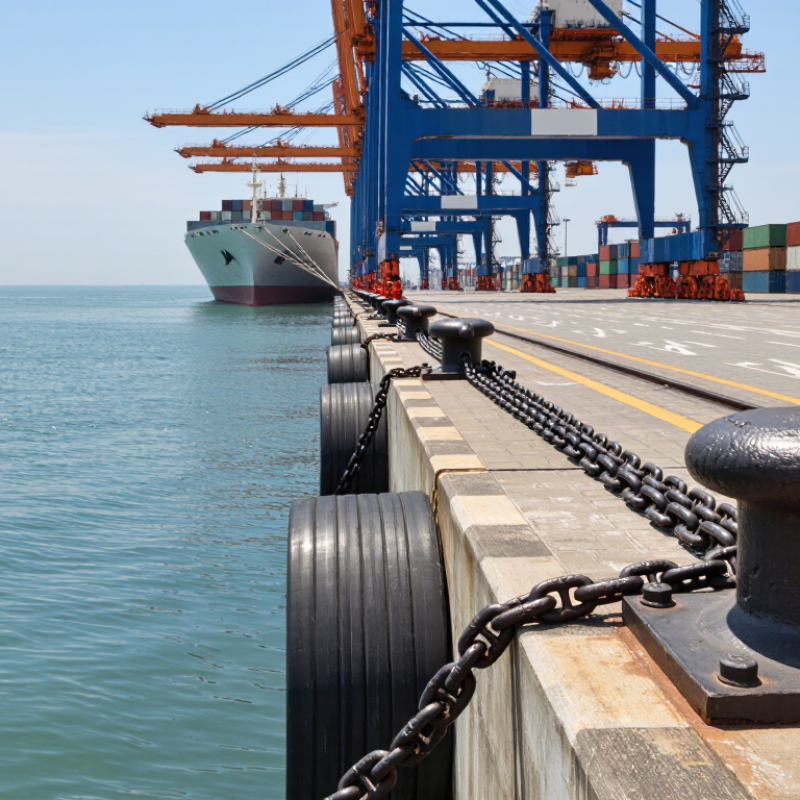
Cylinder fenders suit ship-to-ship transfers, tug operations, dolphins, and quay walls. Their round profile distributes contact pressure across a practical area. For tankers and bulk carriers, buyers should compare energy absorption, reaction force, diameter, length, and allowable compression. Large vessels usually need stronger units with controlled deformation. Smaller workboats may require lighter fenders that move easily during changing tides.

UNCTAD’s Review of Maritime Transport 2024 recorded global seaborne trade at about 12.3 billion tonnes in 2023. More cargo movement means more berthing cycles and greater demand for dependable protection. PIANC fender guidance stresses energy-based design, vessel approach speed, tide range, and structural stiffness. These factors matter more than appearance. A compact cylinder may work well on a steel dolphin, but fail against an uneven concrete edge.

Material quality also deserves close inspection. Buyers should request rubber compound data, compression tests, dimensional tolerances, and production traceability. ISO 17357 provides a useful reference for marine rubber fender performance and testing practices. Yet standards do not remove every risk. I would check low-temperature behavior, ultraviolet exposure, seawater aging, and mounting hardware separately. It is easy to over-specify energy capacity. That can increase cost and transmit unnecessary force into the berth. A better choice matches the vessel, port geometry, operating speed, and maintenance reality. Small details matter.

Global Standards, Materials, and Compatibility Considerations

Global buyers should treat cylinder fenders as engineered contact systems, not simple rubber cushions. The correct choice depends on vessel size, berthing speed, hull shape, and available berth space. ISO 17357 may apply to high-pressure floating pneumatic fenders, but it does not cover every cylinder-shaped product. Ask for current test reports, material data, and dimensional tolerances.

Material selection affects service life. Marine-grade rubber should resist abrasion, ozone, saltwater, and repeated compression. Closed-cell foam can reduce water absorption and maintain buoyancy after surface damage. A steel chain net or protective cover may improve durability, but it can also increase weight and maintenance needs. In cold ports, rubber flexibility must be checked below the expected operating temperature. Details matter.

Compatibility requires a physical review. Measure the hull contact area, berth face, tidal movement, and fender clearance. Check the fender’s energy absorption and reaction force against the vessel’s allowable hull pressure. A unit that fits the drawing may still twist during low-tide contact. That mistake is common. Coated hulls also need softer contact surfaces, because hard fittings can mark or damage protective coatings. Confirm lifting points, drainage, fasteners, and replacement access before ordering. Supplier documents should match the actual production batch, not only a sales specification.

10 Best Cylinder Fenders for Global Buyers in 2026? - Global Standards, Materials, and Compatibility Considerations

Rank Recommended Cylinder Fender Type Typical Construction Common Nominal Size Range Typical Working Condition Best-Fit Applications Material and Environmental Compatibility Relevant Standards and Design References Important Selection Checks
1 High-pressure pneumatic cylinder fender Multiple high-strength tyre-cord layers, inner air-retention layer, end fittings and protective outer rubber. Outside diameter: 500–4,500 mm
Length: 1,000–20,000 mm
Typical internal pressure: 50 kPa or 80 kPa
Floating or suspended service
Ship-to-ship transfer, offshore terminals, large vessels and locations requiring low reaction force. Marine-grade rubber compound; suitable for seawater, splash zones and intermittent contact with petroleum products when the compound is specified for oil exposure. ISO 17357:2014 for high-pressure floating pneumatic rubber fenders; PIANC fender-system design guidance. Confirm rated pressure, compression curve, reaction force, energy absorption, buoyancy, end fittings and inspection access.
2 Low-pressure pneumatic cylinder fender Flexible rubber body with tyre-cord reinforcement and lower inflation pressure than high-pressure models. Outside diameter: 500–3,300 mm
Length: 1,000–15,000 mm
Typical internal pressure: about 50 kPa
Low-to-moderate berthing loads
Small and medium commercial vessels, workboats, pontoons and temporary marine operations. Good tolerance for inclined contact and variable tide levels; use oil-resistant rubber where fuel or lubricants may be present. ISO 17357:2014 where the product falls within its pneumatic fender scope; PIANC design principles for berthing systems. Check allowable compression, inflation stability, puncture protection, temperature range and compatibility with vessel hull coatings.
3 Solid molded cylindrical rubber fender Homogeneous or layered molded rubber cylinder, commonly supplied with a central bore for a chain, rod or mounting shaft. Outside diameter: 200–1,200 mm
Length: 500–3,000 mm
Compression or rolling contact; no inflation required Quays, tugboats, barges, dolphins, guide piles and heavy-duty fixed berthing points. Natural or synthetic rubber compounds can be selected for abrasion, ozone, ultraviolet exposure and low-temperature resistance. PIANC fender-system design guidance; ASTM D2000 or equivalent rubber classification may be used for compound specification. Verify compression set, hardness, allowable deflection, shear loading, bore tolerance, fastening method and replacement clearance.
4 Extruded cylindrical rubber fender Continuous extruded rubber profile cut to length, with optional internal steel reinforcement or mounting grooves. Outside diameter or profile height: 100–600 mm
Cut length: project-specific
Continuous side contact; moderate energy absorption Harbor walls, loading platforms, vessel sides, lock gates and compact quay-edge protection. EPDM is suitable for weathering and ozone exposure; NR or SBR-based compounds are commonly used for general marine abrasion service. PIANC guidance for system layout; ASTM D2000 or equivalent compound requirements; ISO 1817 for liquid-resistance testing where required. Confirm profile tolerances, joint arrangement, bend radius, fastener spacing, abrasion rate and resistance to local impact.
5 Sliding cylindrical fender with low-friction facing Rubber cylindrical core combined with a low-friction polymer wear surface or replaceable facing strip. Core diameter: 200–800 mm
Length: 1,000–6,000 mm
Compression plus longitudinal sliding Ro-ro ramps, ship loaders, lock approaches, vessel guide systems and areas with frequent lateral movement. UHMW-PE or similar low-friction facing is compatible with painted steel and many marine coatings; verify galvanic and chemical compatibility of fasteners. PIANC guidance for fender performance and layout; ASTM D1894 or equivalent friction testing for polymer facing, when specified. Check coefficient of friction, wear rate, bearing pressure, countersunk fasteners, thermal expansion and replacement procedure.
6 Foam-filled cylindrical fender Closed-cell polymer foam core covered by reinforced elastomeric skin, with optional lifting eyes and end protection. Outside diameter: 500–3,300 mm
Length: 1,000–12,000 mm
Floating, semi-floating or suspended service Ports with tidal variation, offshore support vessels, construction barges and temporary marine works. Closed-cell foam maintains buoyancy after minor skin damage; skin compound should be selected for UV, ozone, seawater and oil exposure. PIANC fender-system design guidance; ISO 17357 may be relevant only if the product is a pneumatic rubber fender, not a foam-filled design. Confirm density, buoyancy reserve, energy absorption at design deflection, skin thickness, water uptake and mooring loads.
7 Chain-through cylindrical fender Solid rubber cylinder with a central bore and chain assembly for suspended, hanging or pile-mounted installation. Outside diameter: 300–1,000 mm
Length: 500–2,500 mm
Bore: 80–300 mm
Hanging or vertically guided compression Berthing dolphins, pile guides, vessel landing points and narrow maintenance-access locations. Rubber body can be specified for abrasion and weather resistance; galvanized or stainless chain selection depends on salinity, immersion and maintenance policy. PIANC fender-system design guidance; ISO 12402 or project-specific chain requirements may apply to lifting or mooring components, not to the rubber body itself. Check chain working load limit, bore clearance, pin diameter, edge stress, vertical travel and protection against chain corrosion.
8 Flared-end cylindrical fender Rubber cylinder with enlarged or tapered ends to reduce edge loading and improve alignment during vessel contact. Body diameter: 300–1,200 mm
Length: 1,000–6,000 mm
Angled or misaligned berthing contact Lock walls, vessel guide structures, narrow dolphins and berths exposed to oblique approach angles. High-abrasion rubber is appropriate for repeated sliding; use reinforced end plates where concentrated loads occur. PIANC guidance for berthing-energy distribution and contact pressure; ASTM D2000 or equivalent compound specification. Evaluate contact angle, edge pressure, hull flare, guide clearance, mounting plate stiffness and local structural reactions.
9 Heat-resistant cylindrical fender Specially compounded solid or extruded rubber with enhanced resistance to elevated surface temperature and thermal aging. Outside diameter or profile height: 150–800 mm
Length: project-specific
Continuous or intermittent high-temperature contact Steelworks, bulk-material terminals, hot-process areas and locations near heated cargo or equipment. EPDM or other heat-resistant elastomers may be suitable depending on exposure; EPDM is generally unsuitable for continuous contact with petroleum oils. ASTM D2000 or equivalent rubber classification; ISO 188 for accelerated aging; ISO 1817 for fluid compatibility. Define actual surface temperature, exposure duration, radiant heat, abrasion, chemical contact and required compression performance after aging.
10 Low-temperature cylindrical fender Solid, extruded or pneumatic cylindrical design using a compound formulated to retain flexibility in cold climates. Outside diameter: 200–1,200 mm
Length: 500–8,000 mm
Cold-weather, seasonal or sub-zero marine service Arctic and sub-Arctic ports, cold-storage terminals, winter navigation routes and exposed floating structures. Compound must be tested for low-temperature flexibility, ozone resistance and impact retention; steel hardware should be selected for low-temperature toughness. ASTM D746 or equivalent low-temperature impact testing; ASTM D2137 or equivalent low-temperature flexibility testing; PIANC design guidance. Check minimum design temperature, impact velocity, ice interaction, hydraulic pressure changes, hardware toughness and maintenance intervals.
Dimensions and operating values are representative procurement ranges rather than universal product ratings. Final selection should be based on berthing energy, reaction force, hull pressure, vessel approach velocity, tide, temperature, chemical exposure, structural capacity and documented type-test data. Standards should be confirmed against the latest applicable edition and the project specification.

How International Buyers Can Select and Source the Right Fender

Choosing among the 10 best cylinder fenders for global projects requires more than comparing prices. UNCTAD’s Review of Maritime Transport 2024 states that ships carry over 80% of global merchandise trade by volume. Port downtime is therefore expensive. Buyers should begin with berthing velocity, vessel displacement, hull shape, tide range, and allowable panel pressure.

Ask suppliers for certified energy absorption and reaction-force curves. Do not rely only on catalogue values. PIANC fender-system guidance recommends checking design conditions, tolerances, shear loads, and service performance. Confirm rubber hardness, temperature range, ozone resistance, UV exposure, and seawater compatibility. A fender that performs well in a cool harbor may age faster in tropical sunlight. Small details matter.

Source through a controlled RFQ. Send identical drawings and loading conditions to each supplier. Request material test reports, dimensional inspection records, batch traceability, and installation drawings. ISO 9001 certification can support quality control, but it does not prove fender performance. Arrange pre-shipment inspection when quantities are large. Check lifting eyes, packing, corrosion protection, and container dimensions. Incoterms, delivery schedules, spare-unit planning, and replacement access also affect the real cost. Measure twice. A low quotation can hide weak documentation or difficult future maintenance. Reflect on the design assumptions, too; estimated vessel data is sometimes outdated.