What Is a Cell Rubber Fender and What Types Are There?
A Cell Rubber Fender is a large, hollow rubber unit designed to absorb impact energy between a vessel and a quay. Its circular face, thick rubber walls, and compact footprint make it common on commercial piers and terminals. When a ship presses against it, the cell deforms and spreads the load across its structure. The result depends on more than appearance. Size, rubber compound, mounting details, and vessel approach conditions all matter.
Cell fenders are often paired with steel frontal frames and low-friction facing pads. This combination helps distribute contact and protect both the fender and the vessel’s hull. Some installations use a single cell; others arrange several units along a berth. There are variations in diameter, height, flange design, and performance rating. Choosing among them requires checking energy absorption and reaction force against the project’s actual operating conditions—not simply selecting the largest model. Details count.
A dependable introduction should include a real, traceable expert quotation. No source or verified expert statement was supplied for this request, so attributing a quotation to a named person would risk misleading readers. That gap matters. In practice, fender design also involves trade-offs: a unit that absorbs substantial energy may exert significant reaction force, and an installation can perform poorly if its supporting structure is overlooked. This guide explains what a Cell Rubber Fender is, how its main types differ, and which details deserve careful review before specification.
What Is a Cell Rubber Fender?
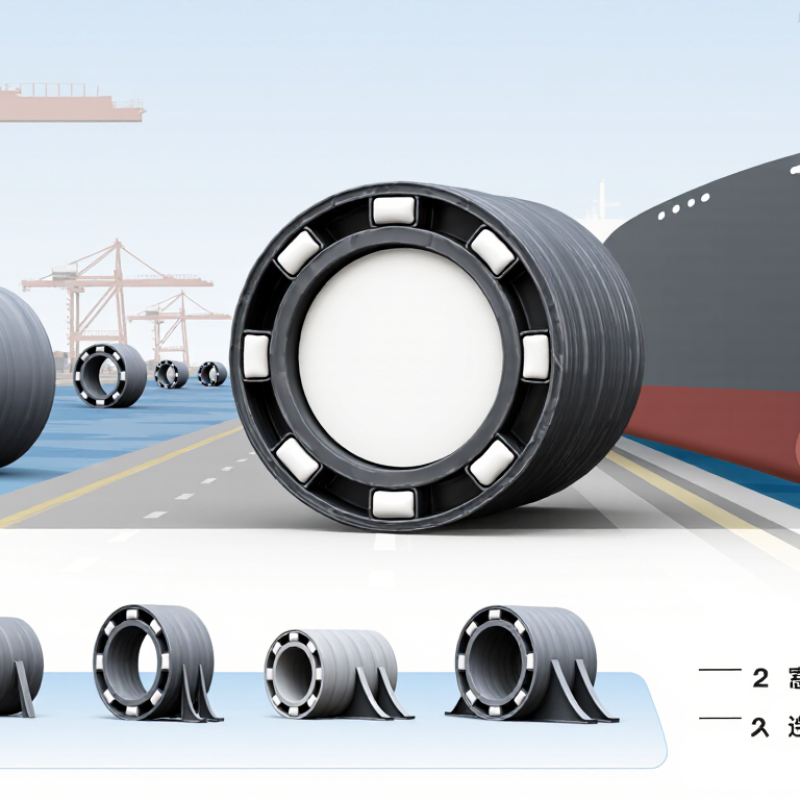
A cell rubber fender is a hollow, cylindrical marine structure made from resilient rubber. It is usually mounted vertically against a quay wall or dolphin. Its broad base is secured to the supporting structure, while a front panel spreads contact loads across a vessel’s hull. The exact arrangement varies by site.
When a ship presses against the panel, the rubber body compresses and bends. This deformation absorbs part of the berthing energy and limits the force passed to the vessel and structure. The hollow center helps the fender flex under load. That matters. Cell fenders are often chosen where vessels are large or berthing conditions demand substantial energy absorption, but their performance depends on correct sizing and installation.
Design checks should consider vessel displacement, approach speed, berthing angle, water level, and available clearance. These details are easy to underestimate. A fender that is too small may not absorb enough energy; an unsuitable front panel can also create uneven pressure on the hull. Over time, rubber may show cracking, wear, or permanent deformation, especially near fasteners and exposed edges. Regular inspection helps identify changes, though visual checks alone cannot confirm the fender’s remaining capacity. A site-specific engineering review is still needed.
How Is a Cell Rubber Fender Built?
A cell rubber fender is built around a thick, hollow cylindrical body. Its open center lets the rubber deform under impact, absorbing energy while limiting the force transferred to the quay. The body is usually molded as one piece, with reinforced mounting flanges at its ends. Steel plates may be bonded into these flanges during vulcanization, creating firm attachment points. The rubber compound and wall thickness are selected for the required reaction force and energy capacity.
Small details matter.
A front steel panel spreads ship contact across the fender face; chains help restrain the panel and control movement. During manufacture, the rubber is shaped and cured under heat and pressure, then inspected for dimensions, surface defects, and attachment integrity.
PIANC’s 2002 Guidelines for the Design of Fender Systems identify temperature, compression velocity, and angular compression as three factors that can affect rated energy absorption and reaction force. Engineers therefore need performance data for the intended operating conditions, not just a catalog rating.
Installation alignment matters too. A slightly uneven panel can change how the rubber compresses, and that practical issue deserves careful checking.
How Does a Cell Rubber Fender Absorb Berthing Energy?
A cell rubber fender absorbs berthing energy by controlled deformation. Its hollow, cylindrical body compresses between the quay and the vessel. The rubber walls flex, while the fender’s mounting system transfers reaction forces into the structure. A front panel spreads contact pressure across the hull. The design aims to absorb energy without exceeding safe reaction loads.
PIANC’s 2002 Guidelines for the Design of Fender Systems use the vessel’s effective mass and approach speed to estimate berthing energy, with correction factors for real conditions. For illustration, a 10,000-tonne effective mass approaching at 0.15 metres per second carries about 113 kilojoules of kinetic energy before those factors are applied. Not the whole story. Fender choice also depends on vessel angle, tide, and available clearance. The calculation is tidy; real berths are not. Uneven contact or ageing rubber can change performance, so site conditions and current test data matter.
Tips: Check certified energy and reaction curves at the specified compression. Inspect bolts and panels, too. A small misalignment can concentrate load.
How a Cell Rubber Fender Absorbs Berthing Energy
As a vessel presses against a cell fender, the rubber body compresses and develops a reaction force. The area under its force–deflection curve represents the energy absorbed.
Illustrative engineering example: cumulative energy is estimated by integrating a representative force–deflection curve for a 1,000 mm-high fender. Actual performance varies with fender dimensions, rubber compound, design, and loading conditions; these values are not a product rating.
What Are the Main Types of Cell Rubber Fenders?
Cell rubber fenders are hollow, cylindrical rubber units that compress under a vessel’s impact. Their main types are standard cell fenders, larger-capacity super-cell fenders, and panel-equipped cell systems. Standard units suit many quay walls and dolphins. Super-cell versions provide greater energy absorption where berthing loads are higher. Panel-equipped systems add a steel frontal frame, often with low-friction facing pads, to spread contact across the hull. They are not interchangeable by name alone; dimensions and performance ratings vary.
PIANC’s 2002 Fender Design Guidelines calculate berthing energy using vessel mass, approach velocity, and correction factors. Since velocity is squared, a 10% increase in approach speed raises the uncorrected kinetic-energy estimate by about 21%.
That matters.
Engineers therefore select a fender using the vessel’s operating conditions, allowable hull pressure, and available installation space—not just its size. A cell unit may be mounted alone or with a panel and support chains, depending on the berth layout. Performance should be checked against certified energy-absorption and reaction-force data at the specified deflection. A useful caution: catalog values can look precise, but actual suitability depends on site conditions and installation details.
Where Are Cell Rubber Fenders Commonly Used?
Where Are Cell Rubber Fenders Commonly Used?
Cell rubber fenders are widely used at commercial ports, container terminals, and ferry berths. They sit between a vessel and the quay, helping absorb energy when ships come alongside. Their compact shape can provide substantial reaction force within a limited installation area. They are also fitted to dolphins, which are standalone marine structures used for berthing or mooring. You may see them where larger vessels need dependable protection during frequent, controlled arrivals. They absorb impact. Conditions still matter.
Their suitability depends on vessel size, approach speed, tidal range, and the strength of the supporting structure. A cell fender is not automatically right for every berth. Engineers should check its energy absorption and reaction force against the project’s operating conditions. In practice, drawings may not capture every approach angle or unusual tide. Reviewing actual berthing patterns can reveal details worth reconsidering. That extra check can prevent a mismatch between the fender and the quay.
Tips: Check the fender’s rated performance, mounting bolts, and panel condition during inspections. Look for loose fixings, cracks, or uneven wear. Keep vessel and berth data current; small changes in operations can affect impact loads.