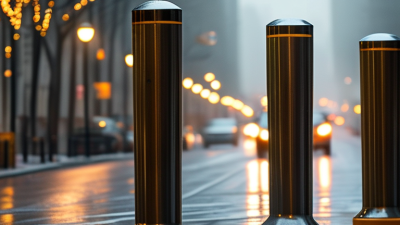
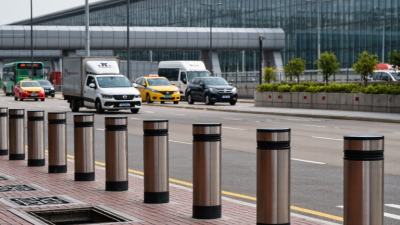
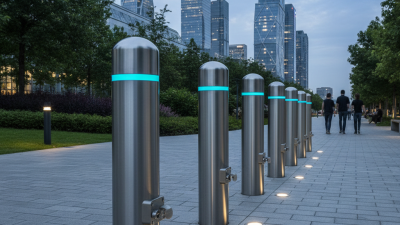
Security Bollards do more than mark a boundary. They help manage vehicle access, protect building entrances, and shape pedestrian routes. Choosing the right type takes more than comparing prices or appearance. Buyers need to consider threat level, vehicle size, impact rating, installation conditions, and daily access needs.
Professional guidance offers a useful starting point. ASTM F2656/F2656M-23 sets out a test method for evaluating vehicle security barriers under controlled impact conditions. FEMA’s Site and Urban Design for Security: Guidance Against Potential Terrorist Attacks also emphasizes integrating protective measures into the wider site design. These references do not select a product for every location. They show why tested performance and practical planning should guide a purchase. Ratings matter.
This guide introduces ten common types, from fixed steel posts to removable, retractable, and automatic models. Each suits different operating conditions. A busy loading entrance may need frequent vehicle access, while a public walkway may require permanent protection with minimal visual obstruction. Buyers should also check foundations, drainage, maintenance, and compatibility with access-control systems. Small details count.
No bollard is a complete security plan. Product performance depends on installation and site conditions, and advertised ratings need careful verification. That part is easy to overlook. The following overview helps buyers compare options, ask suppliers precise questions, and identify trade-offs before committing to a system.
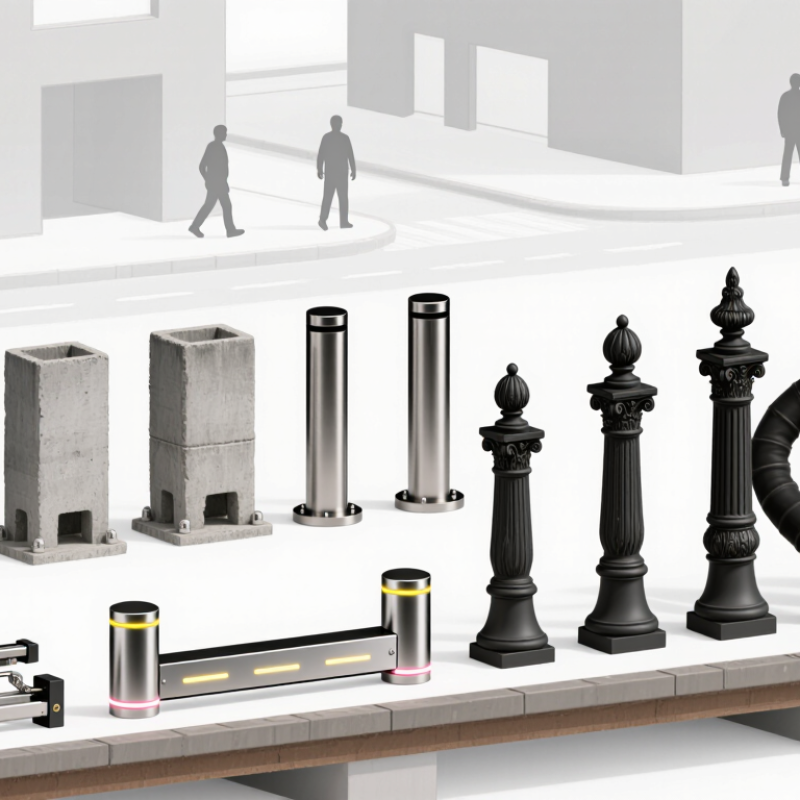
Security bollards are sturdy posts installed near buildings, walkways, parking areas, and entrances. They help guide vehicle movement and create a physical boundary between traffic and people. Some are fixed in place; others retract or can be removed when access is needed. Their appearance ranges from plain steel tubes to decorative stone-look posts.
Protection depends on placement, construction, and the site itself. A properly specified bollard can help resist vehicle impact and reduce the risk of a vehicle reaching a protected area. It may also shield storefront windows, outdoor seating, utility equipment, or pedestrian routes. Not every bollard provides the same level of resistance, though. Soil conditions, spacing, foundations, and installation quality all matter. A strong post with a weak foundation may not perform as expected. That detail is easy to overlook.
Tips: Start by mapping vehicle paths and pedestrian entrances. Check whether emergency or service vehicles need access, and consider visibility at night. Ask a qualified security or civil engineering professional to assess impact requirements and foundation conditions. Leave enough room for people using wheelchairs, strollers, or mobility aids. Bollards can make a place safer, but poorly placed ones can become obstacles. A site visit often reveals issues that a plan misses.

Before comparing fixed, removable, retractable, or crash-rated bollards, define the threat they must manage. Record vehicle access routes, approach speed, turning space, pedestrian flow, and emergency access needs. A narrow delivery lane may need a different layout from a broad, exposed entrance. Measure the actual site; a drawing can miss a curb, drain, or awkward turning radius.
Use tested performance, not appearance, as your baseline. ASTM F2656 classifies full-scale vehicle-impact tests; for example, an M30 rating relates to a 15,000-pound vehicle traveling at 30 mph. ASTM F3016 covers lower-speed impacts. Check the test report for vehicle mass, speed, penetration distance, and installation conditions, then confirm these match your site. A rating is not a guarantee under every impact scenario. The U.S. National Highway Traffic Safety Administration’s 2023 report estimated 40,901 roadway deaths, a reminder that vehicle movement can carry serious consequences—but that figure does not predict risk at a particular property.
Then compare foundation depth, soil conditions, drainage, maintenance access, and operating needs. Removable units may simplify occasional access, while fixed units can obstruct routine deliveries if spacing is poorly planned. Ask a qualified security professional to review the layout and test documentation. Small details matter. I would also revisit assumptions after a site walk; the first plan is not always the best one.
Compare common bollard types by typical installation complexity. Ratings use a 1–5 planning scale (1 = lower complexity, 5 = higher complexity); actual requirements vary with site conditions, foundation design, utilities, and product specifications.
Use this as an initial comparison, not a security rating or engineering assessment. Before choosing, confirm the required vehicle-impact performance, site layout, access needs, installation constraints, maintenance plan, and applicable local standards with qualified suppliers and designers.
Security bollards differ by how they are installed, moved, and operated. Fixed bollards are anchored permanently and suit entrances that need constant protection. Removable models lift out of ground sockets, allowing occasional vehicle access. Hinged bollards fold down, often with a padlock, while retractable bollards lower into the ground for a clear opening. Manual versions need staff to operate them. Automatic models use powered mechanisms and can be controlled from a nearby access point. Convenient, but they require maintenance and dependable power.
Installation creates another important distinction. Deep-mount bollards extend below the surface and rely on substantial foundations. Shallow-mount designs use a reduced excavation depth, which can help where buried utilities limit digging. Neither is automatically right for every site. Check pavement construction and underground services before choosing. Impact-rated bollards are tested to defined vehicle-impact criteria; ordinary decorative posts are not equivalent. Ask for documentation matching the intended threat and installation conditions.
Flexible bollards bend on impact and return upright, making them useful for guiding traffic rather than stopping a vehicle. Decorative bollards prioritize appearance and may still provide pedestrian separation, but their performance varies. Portable bollards can be repositioned for temporary layouts; they generally offer less resistance than permanently anchored systems. That difference matters. A neat-looking post is not proof of security. Compare the required protection, access frequency, foundation constraints, and upkeep. Even a well-specified bollard can underperform if installed poorly, a detail buyers sometimes overlook.
Choosing a bollard starts with the site, not the product label. Walk the route at vehicle height: note entrances, delivery turns, pedestrian paths, and the distance between a post and the wall it protects. Fixed, deeply embedded bollards suit permanent boundaries, while removable or retractable models help when service vehicles need occasional access. Access frequency matters.
Match the protection level to the likely impact and the asset behind it. High-security installations may require tested, impact-rated systems, designed with suitable foundations; a strong-looking post alone proves little. For shopfronts and walkways, surface-mounted or lighter-duty bollards can guide traffic and discourage accidental vehicle entry, but their anchoring and substrate must be checked. Flexible posts can bend after low-speed contact, making them useful for lane guidance, not serious perimeter protection. No post works in isolation.
Then consider daily use. Automatic retractable bollards may suit controlled vehicle entrances, but they need power, drainage, maintenance access, and a plan for faults. Removable units are simpler, though staff must handle and store them safely. Measure turning paths with delivery vans, not just cars. A detail often missed: snow, leaves, or standing water can make an otherwise suitable location difficult to operate. It is worth revisiting the layout after a busy day; drawings rarely show every awkward corner.
Bollard performance depends on the ground beneath it. Before choosing a model, confirm soil conditions, buried utilities, drainage, and the foundation detail. A deep footing can fail if water collects around its base. That small oversight matters. The U.S. Access Board’s 2010 ADA Standards require a 36-inch minimum clear width for accessible routes in many situations. Check the actual site layout so bollards do not narrow a walking path below applicable requirements.
For vehicle-impact applications, match the tested rating to the site’s risk and approach conditions. ASTM F2656/F2656M classifies impact performance by vehicle type, speed, and penetration distance; a rating alone does not confirm that installation will perform the same way. Ask for test documentation and installation drawings. Confirm embedment depth, reinforcement, concrete strength, and spacing before work begins. Field changes can undermine the tested configuration. They happen more often than buyers expect.
Maintenance needs vary by material and mechanism. Inspect fixed units for leaning, cracked concrete, corrosion, loose caps, and standing water. Check removable bollards for worn sleeves, seized locks, and debris in the socket. Record inspections after vehicle contact or nearby construction, even when damage looks minor. There is no universal inspection interval; set one based on exposure, manufacturer instructions, and site use. Keep spare keys and replacement parts accessible, but review the plan each year. A missed inspection can leave a bollard looking sound while its foundation is not.
| Bollard Type | Typical Use | Installation Factors | Maintenance Factors | Buyer Considerations |
|---|---|---|---|---|
| Fixed steel bollard | Perimeter protection, building entrances, and traffic separation. | Usually set in concrete; footing depth and diameter depend on soil, expected impact, and local engineering requirements. | Inspect for corrosion, loose or damaged finishes, and movement at the base; repaint or refinish as needed. | Provides a permanent barrier. Confirm that the layout preserves required pedestrian access and vehicle clearances. |
| Removable bollard | Access routes that need to be opened occasionally, such as service entrances. | Requires a compatible in-ground receiver, drainage where appropriate, and a practical method for removing and storing the post. | Keep the receiver clear of debris and water; check the locking mechanism and inspect the post for wear or damage. | Useful where access changes over time, but removal and replacement require staff time and secure storage. |
| Retractable bollard | Controlled vehicle access at streets, campuses, and restricted entrances. | Requires an underground housing, suitable drainage, power or control provisions for powered models, and coordination with buried utilities. | Check operation, drainage, controls, and moving parts on a scheduled basis; service frequency depends on use and site conditions. | Consider cycle frequency, operating method, backup access, and the consequences of a power or mechanical failure. |
| Automatic rising bollard | Higher-frequency access control at managed vehicle entrances. | Needs a properly designed foundation, electrical and control connections, drainage, and integration with access-control systems. | Requires routine functional checks and inspection of controls, seals, drainage, and mechanical components by qualified personnel. | Assess operating speed, traffic volume, emergency access procedures, and availability of technical support. |
| Crash-rated bollard | Locations where vehicle-impact resistance is a documented security requirement. | Installation must follow the tested system configuration, including post spacing, foundation design, and specified site conditions. | Inspect after any impact and follow the system documentation for replacement or repair; do not assume a damaged unit remains effective. | Verify that independent test evidence matches the required vehicle, impact speed, and installation configuration for the project. |
| Surface-mounted bollard | Sites where excavation is restricted or a rapid installation is preferred. | Anchors must be installed into a sound structural slab; slab thickness, reinforcement, edge distance, and anchor layout are critical. | Check anchors for loosening and inspect the surrounding concrete for cracking or spalling. | May be unsuitable where the slab cannot support the required loads; confirm the surface and design capacity before purchase. |
| Concrete bollard | Durable perimeter control in public spaces, parking areas, and industrial sites. | Heavy units may need lifting equipment and a stable base; embedded installations require suitable footing and positioning. | Inspect for cracking, spalling, settlement, and damage to any protective coating or finish. | Offers substantial mass but can be difficult to relocate. Check visibility, pedestrian circulation, and replacement logistics. |
| Decorative bollard | Public-realm and commercial settings where appearance is important alongside access control. | Can be fixed, removable, or surface-mounted; select a mounting method that meets the site's functional requirements. | Maintain coatings and inspect decorative covers, fasteners, and finishes for weathering or damage. | Decorative appearance does not establish impact resistance. Confirm performance separately if security protection is required. |
| Illuminated bollard | Pathways, parking areas, and entrances requiring low-level guidance lighting. | Requires an appropriate electrical supply or approved standalone power arrangement, with safe cable routing and suitable weather protection. | Clean lenses, test lighting, and inspect seals and electrical connections in accordance with applicable safety procedures. | Check light output, glare, energy use, service access, and whether the lighting remains functional in local weather conditions. |
| Flexible impact bollard | Guiding vehicles and marking lanes where minor, low-speed contact may occur. | Typically anchored to a suitable surface or installed in a prepared footing, following the specific product instructions. | Inspect for tearing, permanent deformation, loose fixings, and reduced visibility; replace units that no longer function as intended. | Designed primarily for guidance and repeated light contact, not as a substitute for a tested vehicle-security barrier. |