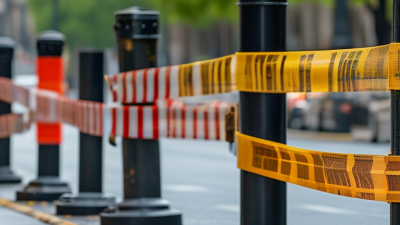
Street Bollards are more than short posts beside a pavement. They quietly shape how people, bicycles, cars, and delivery vehicles share public space. A well-chosen bollard can protect a shopfront, guide pedestrians, and preserve an open streetscape. The wrong choice can create clutter, block maintenance access, or offer little real protection.
Security expert Bruce Schneier famously said, “Security is a process, not a product.” That principle applies directly to Street Bollards. Their performance depends on placement, spacing, foundation depth, visibility, maintenance, and the threats a site actually faces. Fixed bollards may suit a busy retail entrance. Removable models can support occasional vehicle access. Retractable bollards offer flexibility, while flexible or decorative designs may work better where appearance and low-impact guidance matter most. Crash-rated options require more careful planning and professional assessment.
There is no universal best type. A narrow historic lane needs different protection from a hospital entrance or a loading area. Imagine rainwater collecting around a poorly drained base, or a delivery van striking a post at dusk. Small details matter. In practice, selection is sometimes less perfect than expected. Budgets change, site data may be incomplete, and public preferences can conflict with safety goals. This guide examines the main Street Bollards types, their strengths, limitations, and practical applications. It also asks a necessary question: are we choosing genuine protection, or simply installing something that looks secure?
Street bollards are short, sturdy posts placed along roads, sidewalks, crossings, and building edges. They separate people from moving vehicles without forming a solid wall. A typical bollard uses steel, reinforced concrete, or engineered polymer around a stable base. Its height and spacing should guide pedestrians naturally. There must also be enough room for wheelchairs, strollers, and maintenance equipment. Bollards can prevent accidental vehicle entry, protect corners, and improve visibility at night.
How do they work?
A fixed bollard transfers impact energy into its post, anchor system, and foundation. Some bend or deform, while others remain upright after a rated collision. Removable models lock into ground sockets and allow controlled service access. Retractable units rise from below the pavement through mechanical or hydraulic systems. Flexible posts mainly mark boundaries and recover after light contact. Their protection is limited. The best type depends on vehicle risk, soil conditions, drainage, visibility, and access needs. A strong post in weak ground may fail.
Good planning starts with a site survey, not a catalogue. Measure turning paths, sight lines, snow clearance, and emergency routes. Inspect anchors, welds, reflective bands, and corrosion regularly. Small gaps can invite a vehicle through, while tight spacing may trouble pedestrians. Appearance often receives too much attention during reviews. Performance matters more, although the design should still feel welcoming. No system is perfect. A damaged foundation can reduce protection before the post looks loose.
Street bollards are short posts that guide movement, protect people, or control vehicle access. Their design ranges from simple visual markers to tested security barriers. The World Health Organization’s Global Status Report on Road Safety 2023 records about 1.19 million annual road deaths worldwide. That figure reinforces a practical point: streets need clear separation between vehicles and pedestrians.
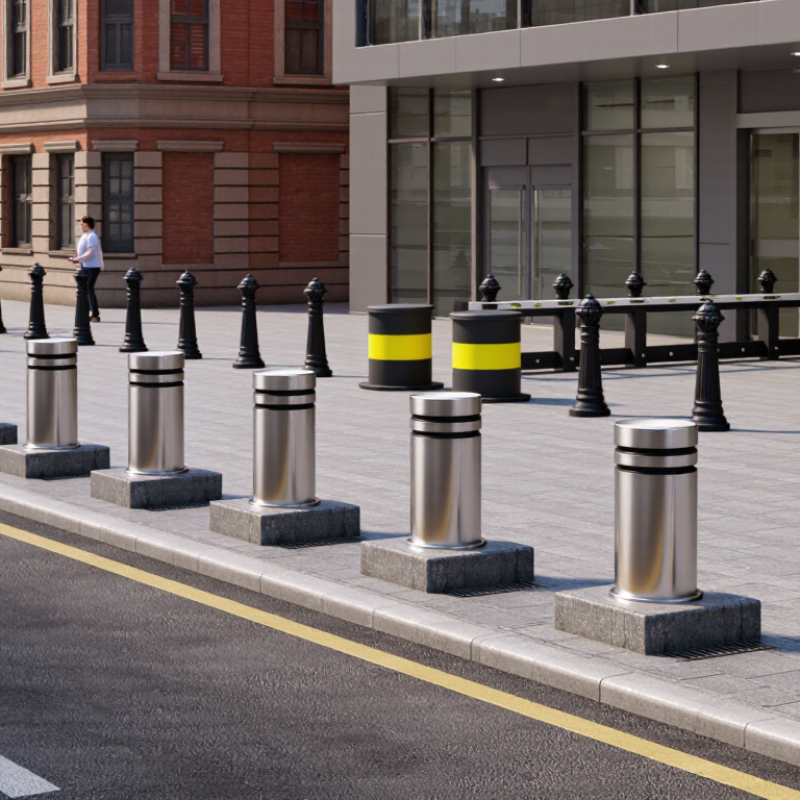
The main types include fixed, removable, retractable, flexible, and crash-rated bollards. Fixed steel bollards suit permanent protection outside buildings, plazas, and busy sidewalks. Removable models support occasional vehicle access, but their sockets need regular cleaning and inspection. Retractable bollards offer stronger access control, although motors, drainage, and power systems increase maintenance demands. Flexible posts bend during minor impacts and suit parking guidance. They are not a substitute for structural protection. Crash-rated bollards are engineered and independently tested for specific vehicle speeds and weights. Standards such as ASTM F3016 and IWA 14-1 help buyers compare tested performance.
Which type is best depends on risk, access frequency, street width, and maintenance capacity. FHWA guidance emphasizes designing pedestrian facilities around visibility, accessibility, and predictable movement. A common field mistake is choosing heavy posts without checking wheelchair clearance or emergency access. Another is trusting a product label without reviewing the test configuration. Not every rated bollard performs equally in every installation. A neat row can still create a hazard. Review the site, confirm the required rating, and inspect foundations before purchase. The strongest option may be excessive for a quiet driveway, while a decorative post may fail beside a crowded transit entrance.
Street bollards are short vertical posts used to control vehicle access, protect pedestrians, and define roads or public spaces. The best type depends on whether the location needs permanent protection, occasional access, automated control, or impact flexibility.
The chart shows common visible-height ranges used in street and public-realm applications. Fixed and removable bollards provide permanent or manually controlled protection, retractable bollards allow controlled vehicle access, and flexible bollards are designed to bend or rebound after light contact. Actual specifications vary according to local standards, site conditions, and the required security level.
What Are Street Bollards and Which Type Is Best?
How to Compare Bollard Materials, Designs, and Features
Street bollards are short posts that guide vehicles, protect pedestrians, and define access. The best choice depends on impact risk, placement, appearance, and maintenance capacity. Steel offers strong protection and many finish options. Stainless steel resists corrosion near salty air, but costs more. Aluminum is lighter, though it may suit lower-impact areas better. Concrete feels permanent and heavy, yet repairs can become difficult after damage. Plastic or flexible posts improve visibility, but they usually provide limited physical protection.
Design matters as much as material. Fixed bollards suit loading zones and building edges where protection stays constant. Removable models help when deliveries or emergency access change throughout the day. Retractable designs offer convenience, but their mechanisms need regular inspection. Look for deep anchoring, rounded edges, reflective bands, drainage, and clear daytime visibility. Lighting can help at night, although poor placement may create glare. I once favored a sleek finish over visibility. That was a practical mistake.
Tips: Measure vehicle paths before selecting spacing. Check the substrate, not only the post. Compare tested impact data carefully. Ask who will repair damaged units. Keep maintenance realistic. A beautiful bollard that rusts, fades, or blocks access will age badly. Consider winter grit, standing water, cleaning tools, and replacement lead times. Small details matter.
| Bollard Type / Material | Typical Construction | Impact & Security Capability | Corrosion Resistance | Maintenance Needs | Appearance & Finish Options | Best-Suited Applications | Main Limitations |
|---|---|---|---|---|---|---|---|
| Fixed carbon-steel bollard | Welded or formed steel tube permanently anchored in concrete or attached to a structural base. | High when properly engineered. Common choice for vehicle-denial and perimeter protection; performance should be verified by a tested or engineered system. | Moderate without protection; improved substantially by hot-dip galvanizing, paint systems, or powder coating. | Inspect coatings, welds, anchors, and the surrounding foundation; repair damaged coating promptly. | Smooth, ribbed, reflective, painted, powder-coated, or galvanized finishes. | Road edges, building fronts, loading areas, parking controls, and high-security perimeters. | Heavy; exposed cut edges or scratches can corrode if not repaired. Installation may require excavation and traffic control. |
| Hot-dip galvanized steel bollard | Steel bollard coated with a bonded zinc layer after fabrication, subject to the quality of the galvanizing process. | High. The steel provides structural strength while the zinc coating protects the surface from atmospheric corrosion. | High in many outdoor environments. Service life varies with coating thickness, moisture, salts, pollutants, and damage. | Generally low; check for white rust, mechanical damage, standing water, and galvanic contact with dissimilar metals. | Matte silver-gray finish; can be over-painted or powder-coated when a different color is required. | General streetscapes, coastal-adjacent locations, industrial sites, and exposed outdoor installations. | Zinc appearance may be less decorative; coating can be damaged by severe impact or poor drainage. |
| Stainless-steel bollard | Stainless-steel tube or fabricated shell, usually with a concrete-filled or structural internal core for higher protection levels. | Moderate to high. Structural capacity depends on wall thickness, internal reinforcement, base plate, and anchorage—not merely the stainless finish. | Very high in many urban and marine environments. Correct grade, surface finish, cleaning, and drainage remain important. | Low to moderate; remove salt, grime, and iron contamination, especially near roads treated with de-icing materials. | Polished, satin, brushed, or bead-blasted metallic appearance with a premium architectural look. | Retail entrances, civic spaces, transit areas, hospitals, hotels, and coastal public sites. | Higher initial cost; polished surfaces show scratches and fingerprints more readily. |
| Ductile-iron bollard | Cast iron body, often designed with a decorative profile and anchored to a foundation or structural base. | Moderate to high. Strong and heavy, but the casting, base connection, and foundation must be evaluated for the intended hazard. | Moderate; requires a durable coating system and attention to chips, cracks, trapped water, and exposed metal. | Periodic coating inspection and localized rust repair; heavier castings can make replacement more difficult. | Traditional, ornamental, or heritage appearance; commonly painted in multiple colors. | Historic districts, civic landscapes, parks, plazas, and architectural streetscapes. | Heavy and less adaptable than modular steel; decorative castings may be more expensive to replace. |
| Aluminum bollard | Extruded or cast aluminum shell, sometimes combined with a steel core or internal reinforcement. | Low to moderate for basic models. Reinforced designs can provide greater resistance, but aluminum is generally less suitable for severe vehicle-impact threats than structural steel. | High in ordinary outdoor conditions. Marine exposure and contact with dissimilar metals require suitable alloy, isolation, and detailing. | Low; clean surfaces and inspect for dents, coating damage, and galvanic corrosion around fasteners. | Anodized, painted, powder-coated, or mill finish; lightweight and visually clean. | Pedestrian guidance, light-duty access control, campuses, and projects where low weight matters. | Lower strength and dent resistance than steel in comparable lightweight configurations; not automatically a security bollard. |
| Polymer or flexible bollard | UV-stabilized plastic, polyurethane, recycled polymer, or flexible elastomer, typically surface-mounted or embedded. | Low. Designed mainly for visibility, lane guidance, and minor contact; not intended to stop vehicles unless specifically engineered and tested. | High against moisture and many salts; UV resistance depends on the formulation and product quality. | Low; clean dirt and replace units that become brittle, cracked, permanently deformed, or lose visibility. | Bright colors, reflective bands, flexible profiles, and high-visibility finishes. | Temporary traffic management, cycle lanes, parking guidance, and low-speed pedestrian areas. | Limited security value; may be damaged by cutting, fire, extreme cold, or repeated vehicle contact. |
| Removable bollard | Bollard post secured in a ground sleeve or receiver and removed with a key, locking mechanism, or lifting point. | Low to high. Security depends on the post construction, locking sleeve, foundation, and whether the assembly has been impact-tested. | Depends on the selected material and drainage design; sleeves should prevent water and debris accumulation. | Clean and lubricate the locking mechanism; inspect the sleeve, lid, drainage, and alignment. | Available in utilitarian or architectural forms and in painted, galvanized, stainless, or decorative finishes. | Service access, emergency routes, event spaces, private drives, and areas requiring occasional vehicle access. | Can be heavy to handle; an unsecured or poorly fitted post may provide little protection. |
| Retractable or automatic bollard | Powered or manually operated post that rises from and lowers into a below-ground housing. | Moderate to very high, depending on the tested model. Security versions require engineered foundations, controls, drainage, and a defined impact rating. | Depends on housing materials, seals, drainage, climate, and maintenance of moving components. | Highest maintenance category; inspect hydraulics or actuators, controls, sensors, seals, drainage, and emergency-release functions. | Modern architectural appearance; can incorporate warning lights, reflective bands, and access-control interfaces. | Controlled vehicle entrances, restricted streets, government sites, commercial access points, and emergency-service routes. | Highest installation and lifecycle complexity; failure can restrict access, so backup operation and drainage are essential. |
| Decorative architectural bollard | Decorative metal, stone, concrete, or composite housing, with or without a structural internal core. | Low to moderate unless specifically engineered. Decorative appearance alone does not indicate vehicle-impact resistance. | Varies widely by material, coating, joint design, and exposure conditions. | Usually periodic cleaning and surface repair; porous stone and concrete may require additional sealing. | Wide range of shapes, colors, textures, stone-like finishes, lighting options, and custom profiles. | Plazas, parks, heritage areas, shopping streets, hospitality projects, and pedestrian zones. | Visual design may be prioritized over security; confirm structural performance before using it near vehicle threats. |
Street bollards are short vertical posts that guide traffic, protect people, and define public space. Their best form depends on the street’s daily pressures.
A busy shopping lane may need fixed steel bollards near shopfronts and crossings. These posts provide constant separation between vehicles and pedestrians. Access matters. Removable bollards can suit markets, service roads, and emergency routes requiring occasional vehicle entry. They offer flexibility, but staff must store and reinstall them correctly.
Retractable bollards fit streets with changing access schedules. They can protect pedestrian zones during peak hours and allow deliveries later. However, they need reliable maintenance, drainage, and clear operating controls. In historic districts, slimmer designs and finishes may reduce visual conflict with older buildings.
Placement should preserve doorways, wheelchair routes, drainage channels, and sightlines. A beautiful installation can still fail if it narrows the pavement.
High-risk locations may require impact-tested security bollards designed by qualified engineers. Their spacing, foundation depth, and surrounding ground conditions matter as much as the post itself. Site surveys should record vehicle movements, delivery times, pedestrian density, and winter maintenance needs.
I have seen plans favor appearance over access, creating avoidable daily problems. That choice deserves reconsideration. Measure twice. Choose the bollard type after observing the street, not only the drawing.
Street bollards are short posts that guide vehicles, protect pedestrians, and define public space. The best choice depends on impact risk, location, visibility, and maintenance capacity.
The World Health Organization’s Global Status Report on Road Safety 2023 estimates 1.19 million annual road deaths worldwide. Pedestrians account for about 23% of those fatalities. This makes protection near crossings, entrances, and crowded sidewalks especially important.
Impact-rated bollards suit areas exposed to vehicle intrusion. Flexible models can absorb minor contact and reduce replacement costs. Fixed steel units offer stronger resistance, but installation quality matters. Removable or retractable options support emergency access, though they require reliable locking systems.
Consider spacing carefully. Bollards should protect people without narrowing accessible routes or creating trip hazards. High-contrast finishes and reflective bands improve night visibility. However, polished surfaces may create glare near headlights. That detail is easy to miss.
Tips
Check local road and accessibility standards before ordering. Ask suppliers for tested impact ratings, foundation requirements, and corrosion data. Inspect drainage around each base after heavy rain. A bollard that looks strong may fail because water weakens its foundation. Review sightlines from a child’s height and from a wheelchair. No single type is best. The right specification balances safety, access, appearance, lifecycle cost, and realistic maintenance.