Leave Your Message

Who Are the Top 10 Parking Bollard Suppliers in China?

Choosing a reliable supplier of Parking Bollards takes more than comparing product photos or headline prices. Buyers should examine steel grade, wall thickness, surface treatment, impact performance, installation requirements, and replacement-part availability. A neat catalog is helpful. It is not proof of consistent manufacturing. Ask how each specification is tested, and request clear product documentation before comparing quotations.

Parking-policy expert Donald Shoup is often quoted as saying, “Parking requirements are a fertility drug for cars.” His observation concerns parking policy, not bollard design, but it highlights why physical parking-space management matters. Bollards can help define pedestrian routes, protect entrances, and keep vehicle access points clear. The right model depends on the site: a busy loading bay has different needs from a quiet office walkway. Small details count, such as anchor placement, drainage, reflective bands, and the clearance needed for maintenance vehicles. This guide reviews ten Chinese suppliers through practical criteria, including product range, customization, quality controls, service, and export experience. It aims to give buyers a useful starting point, not a universal verdict. Supplier information can change, and published claims still need checking. A ranking can simplify the search, but it cannot replace a site assessment or a direct conversation with the manufacturer.
Who Are the Top 10 Parking Bollard Suppliers in China?

What Are Parking Bollards and Where Are They Used?

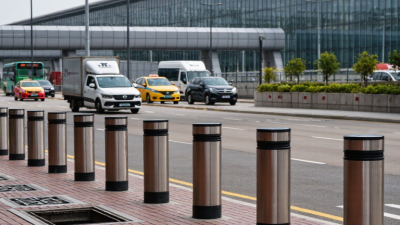
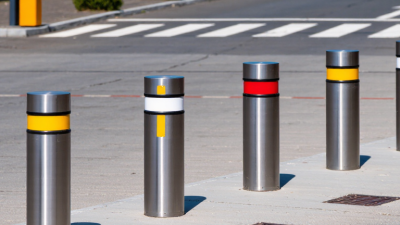
Parking bollards are short, fixed or removable posts that mark vehicle boundaries and protect pedestrian space. They appear at parking-lot edges, storefronts, loading bays, garage entrances, and beside walkways. Some are steel or concrete; others use flexible materials or retractable designs. Their purpose may be access control, impact protection, or simply keeping a bumper away from a doorway. Placement matters. Spacing should accommodate wheelchairs, strollers, and turning vehicles while closing unsafe gaps. Bollards can guide traffic, but they cannot replace clear signs, good lighting, or sound site design.

The World Health Organization’s Global Status Report on Road Safety 2023 estimates 1.19 million road-traffic deaths worldwide each year. This figure does not prove that bollards alone prevent crashes; it provides context for layered safety planning. For impact-sensitive sites, buyers should check tested performance, anchoring, visibility, corrosion resistance, and maintenance access. ASTM F3016/F3016M provides a low-speed vehicle-impact test method for protective devices. Site conditions still matter. Posts installed in weak paving may loosen, while overly dense placement can obstruct access. The right choice depends on vehicle speed, pedestrian flow, drainage, and the consequences of contact—not appearance alone.

How Are China’s Leading Parking Bollard Suppliers Identified?

How should China’s leading parking bollard suppliers be identified? Start with verifiable production and product evidence, not search rankings or catalogue claims. China produced 30.161 million vehicles in 2023 and sold 30.094 million, according to the China Association of Automobile Manufacturers. World Steel Association’s World Steel in Figures 2024 reports 1,019.1 million tonnes of Chinese crude-steel output that year. These figures show industrial scale, not bollard quality. Keep that distinction clear.

Compare suppliers using the same checklist: material certificates, weld inspection records, corrosion protection details, installation guidance, and traceable quality controls. Request test reports that match the exact model being quoted. For retractable or powered units, ask for cycle-test results and clear maintenance instructions. Review sample units for sharp edges, uneven coatings, and water-prone seams. A polished catalogue is not proof. This screening is useful, but it cannot replace an independent factory audit or a project-specific trial.

Tips: Ask for one recent, redacted inspection record and verify its model number against the quotation. Then test a sample in conditions close to the intended site. Small details matter. One limitation: supplier documents may vary in scope, so compare methods, not just headline figures.

Who Are the Top 10 Parking Bollard Suppliers in China?

Who Are the Top 10 Parking Bollard Suppliers in China?

A useful shortlist should compare more than catalog size. China’s National Bureau of Statistics reported an urbanization rate of 66.16% in 2023, while World Bank data put the global urban population share at about 57%. These figures describe the growing urban context, not bollard sales or supplier rankings. That distinction matters. Buyers should check whether a supplier manufactures its own products, provides clear material specifications, and can document installation and quality-control procedures.

For a practical top-ten comparison, request drawings, load or impact-test records where relevant, corrosion-protection details, warranty terms, and sample lead times. Inspect the finish closely: rough welds, thin coatings, or inconsistent dimensions can become expensive problems outdoors. Ask how the supplier handles custom spacing, replacement parts, and packaging for export. No ranking is perfect. Public information may be incomplete, and a polished website is not proof of factory capability. The best choice depends on site conditions, traffic flow, maintenance plans, and the evidence a supplier is willing to share. These checks make comparisons more reliable than choosing by price alone.

How Do These Suppliers Compare in Products and Capabilities?

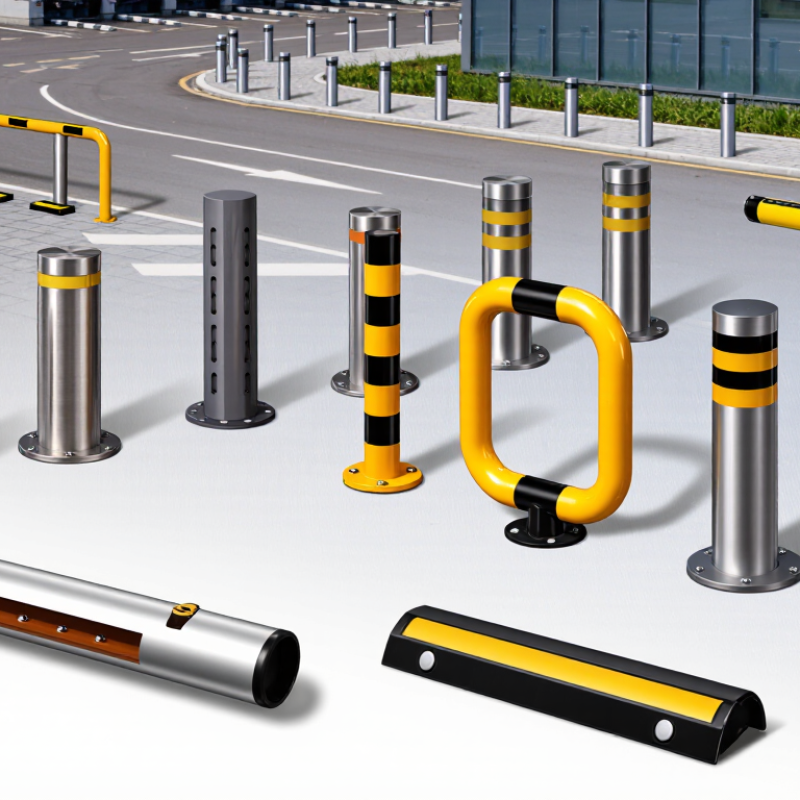
Parking bollard suppliers in China differ less by catalogue size than by engineering depth. Many offer fixed, removable, and retractable models, but their materials and mechanisms vary. Compare stainless-steel shells, galvanized-steel bodies, wall thickness, and drainage details. These choices affect corrosion resistance and maintenance outdoors.

Small details matter.

For vehicle access, ask whether a supplier provides manual, hydraulic, or electromechanical options, and what site conditions each requires. Request dimensional drawings, installation instructions, and test records for the exact model—not just a general product brochure. A supplier with in-house machining and assembly may handle custom heights or mounting plates more consistently. Still, customization can add lead time, and a polished sample does not prove every production batch matches it.

Compare production capacity, inspection procedures, spare-part availability, and export packaging alongside price. Ask how the supplier checks welds, finishes, and operating cycles before shipment. If possible, review a working unit and confirm its dimensions against your site plan. Rankings can be misleading: a large factory may suit bulk orders, while a smaller specialist may respond better to unusual layouts. I would verify claims independently; supplier descriptions are not always equally detailed.

What Should Buyers Consider When Choosing a Supplier?

Choosing a parking bollard supplier requires more than comparing unit prices. Check whether the proposed model has independent impact-test documentation, clear material specifications, and installation drawings. ASTM F3016 evaluates low-speed vehicle barrier systems at defined impact levels. Ask whether the tested assembly matches the supplied bollard, including its foundation and mounting details. A strong steel post can still fail if its base is poorly designed.

Safety claims deserve scrutiny. The World Health Organization’s Global Status Report on Road Safety 2023 reports about 1.19 million road deaths annually worldwide. This figure is not a measure of bollard performance, but it underscores why buyers should verify safety-related claims. Request test reports, coating specifications, corrosion-resistance details, and inspection records. Also compare production capacity, delivery schedules, spare-part availability, and warranty terms. One detail is easy to miss: a sample may not reflect a supplier’s routine production quality.

Tips: Ask for a recent factory quality-control record and a project reference with similar traffic and weather conditions. Confirm the quoted price includes anchors, installation guidance, and packing details. Paperwork matters. So does follow-up support. If a supplier cannot explain its test limits plainly, pause and ask again.

Who Are the Top 10 Parking Bollard Suppliers in China? - What Should Buyers Consider When Choosing a Supplier?

This buyer-oriented comparison covers ten important supplier evaluation areas. It does not identify or rank individual companies; verify each supplier’s claims and documentation independently.

Evaluation Area What to Check Useful Evidence Why It Matters
1. Product range Confirm the supplier offers the required type: fixed, removable, retractable, or automatic bollards. Product catalogue, technical drawings, and model-specific specifications. Different applications need different operating methods and installation arrangements.
2. Material and finish Check the specified material, wall thickness, surface treatment, and corrosion protection. Material specifications, finish details, and product drawings. Material and finish should suit the site environment, exposure, and expected use.
3. Impact-security claims For vehicle-security applications, distinguish tested crash-rated products from ordinary traffic-control bollards. A test report identifying the exact model, configuration, test method, and result. ASTM F2656 and IWA 14-1 are examples of vehicle-barrier test standards. A standard or rating should not be assumed to apply to every product in a supplier’s range.
4. Operating system For automatic models, review the drive mechanism, controls, power requirements, and manual-release procedure. Wiring diagrams, control-system documentation, and operating instructions. Clear operating and emergency procedures help with installation, daily use, and servicing.
5. Weather and ingress protection Check the stated environmental limits and any IP rating for electrical enclosures or components. Model-specific rating documentation and installation requirements; IP-code classifications are defined in IEC 60529. An IP rating applies to the stated equipment configuration and does not by itself establish crash performance.
6. Installation requirements Confirm foundation dimensions, drainage needs, cable routes, and any site-preparation work. Foundation drawings, installation manual, and site survey requirements. Site conditions can affect feasibility, installation cost, and system performance.
7. Quality management and inspection Ask how incoming materials, production stages, and finished goods are inspected. Inspection records, quality-control procedures, and any valid ISO 9001 certificate within its stated scope. A quality-management certificate is not a substitute for checking product-specific requirements.
8. Customization and integration Clarify available dimensions, finishes, control interfaces, and compatibility with access-control systems. Approved drawings, interface specifications, and written confirmation of the project configuration. Written specifications reduce the risk of mismatches between equipment and site systems.
9. Warranty and after-sales support Review warranty coverage, exclusions, spare-parts availability, and technical-support arrangements. Written warranty terms, parts list, service instructions, and support contact details. Support and maintenance requirements should be understood before purchase.
10. Commercial and export readiness Confirm quotation scope, lead-time assumptions, packaging, shipping terms, and destination-market requirements. Itemized quotation, agreed delivery terms, packing details, and applicable conformity documents. Requirements vary by destination and project; verify which documents and costs apply to the order.