| Material durability |
Hot-dip galvanized carbon steel |
Provides a zinc coating that protects steel from corrosion. Service life depends on coating thickness, exposure, installation quality, and maintenance. |
High structural strength; suitable for outdoor use; generally more economical than stainless steel. |
Cut edges, weld areas, and damaged coating can corrode if not repaired. The appearance is industrial rather than decorative. |
Parking lots, loading areas, industrial sites, warehouses, and general vehicle-access control. |
Ask for steel grade, zinc coating standard or measured coating thickness, weld quality, drainage design, and repair method for damaged coating. |
| Material durability |
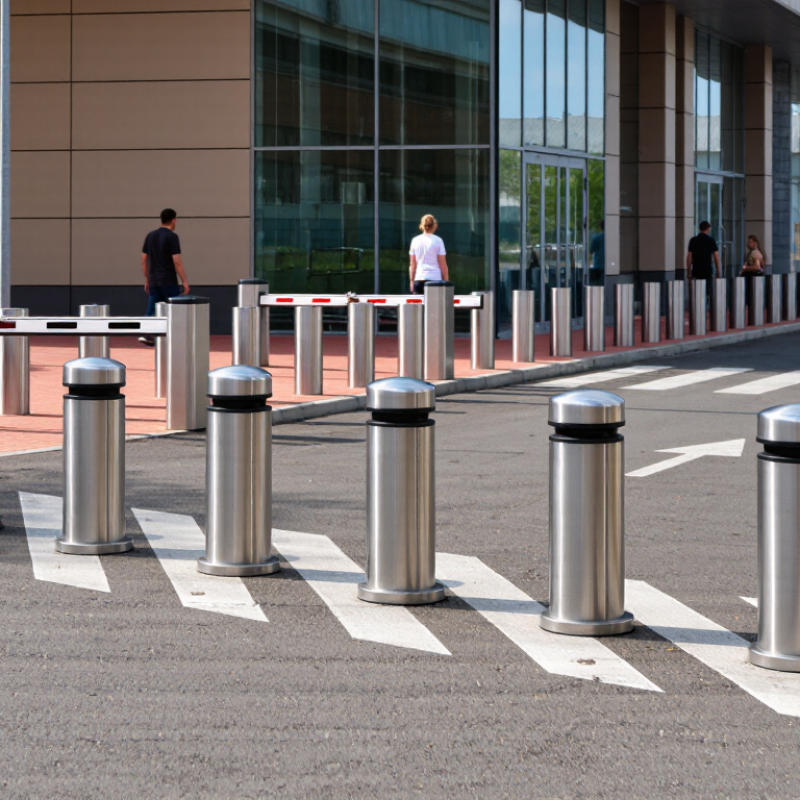
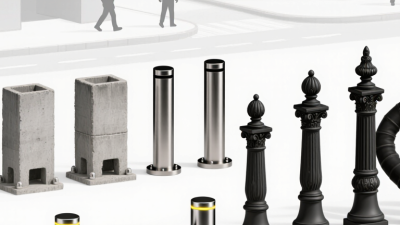
Stainless steel |
Offers strong corrosion resistance, with performance varying by stainless-steel grade and environmental conditions. |
Clean appearance; good resistance to moisture; low routine maintenance in many urban environments. |
Higher purchase cost; unsuitable grades may stain or suffer corrosion in coastal, chloride-rich, or chemically aggressive environments. |
Commercial entrances, hotels, offices, hospitals, shopping areas, and high-visibility pedestrian zones. |
Confirm the exact stainless-steel grade, surface finish, weld treatment, chloride exposure suitability, and cleaning requirements. |
| Material durability |
Aluminum |
Lightweight and naturally oxide-forming, but generally less resistant to severe impact and abrasion than steel. |
Easy to handle and install; good resistance to atmospheric corrosion; suitable for decorative applications. |
Lower impact strength than many steel designs; galvanic corrosion can occur when improperly connected to dissimilar metals. |
Decorative pedestrian areas, light-duty access control, and projects where installation weight is important. |
Check alloy and wall thickness, impact requirements, connection hardware, protective finish, and compatibility with adjacent metals. |
| Material durability |
Flexible polyurethane or rubber |
Can deform during a low-speed contact and return toward its original shape, depending on formulation, temperature, and design. |
Reduces damage from minor vehicle contact; lightweight; often suitable for temporary or visual separation. |
Not normally intended to resist deliberate vehicle attack or provide high-security perimeter protection; weathering performance varies. |
Parking guidance, temporary traffic management, warehouses, private driveways, and low-speed areas. |
Verify temperature range, UV resistance, rebound performance, anchoring method, and whether the product is impact-rated. |
| Impact protection |
Fixed steel bollard |
Provides permanent physical protection when correctly designed, anchored, and installed on an adequate foundation. |
Strong, simple, and reliable; no power supply required; suitable for protecting building edges and equipment. |
Cannot be removed quickly; may obstruct emergency access or maintenance routes if poorly positioned. |
Building corners, storefronts, utility equipment, loading bays, and permanent vehicle-exclusion zones. |
Request impact design criteria, post dimensions, foundation requirements, anchor details, and installation drawings. |
| Access flexibility |
Removable bollard |
Can be taken out when authorized vehicle access is needed. Security depends heavily on the socket and locking system. |
Balances vehicle restriction with periodic access; does not require mechanical or electrical operation. |
Requires secure storage when removed; repeated handling can damage locks, sockets, or surface finishes. |
Service entrances, event venues, emergency routes, private parking, and shared pedestrian streets. |
Check locking mechanism, key control, socket drainage, lifting weight, replacement parts, and tamper resistance. |
| Access flexibility |
Retractable or automatic bollard |
Moves between raised and lowered positions using manual, pneumatic, hydraulic, or electric systems. |
Provides controlled access without manual removal; can integrate with access-control systems. |
Higher purchase and installation cost; requires power, controls, drainage, inspections, and planned maintenance. |
High-traffic entrances, commercial sites, restricted streets, logistics facilities, and managed parking areas. |
Confirm cycle rating, operating speed, emergency release, power requirements, drainage, control compatibility, and local service support. |
| Visibility and safety |
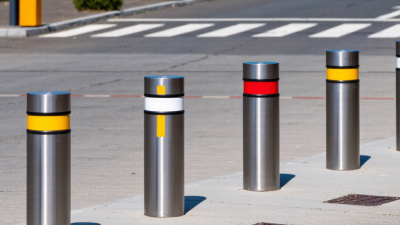
Reflective bands or reflective sheeting |
Improves nighttime visibility when illuminated by vehicle headlights. Performance depends on grade, cleanliness, and placement. |
Low-cost safety improvement; helps drivers identify the bollard in low-light conditions. |
Reflective material can become dirty, scratched, detached, or less effective over time. |
Parking aisles, driveways, loading zones, pedestrian crossings, and low-light outdoor locations. |
Specify reflective performance, band width, adhesive or mechanical fixing, weather resistance, and replacement availability. |
| Visibility and safety |
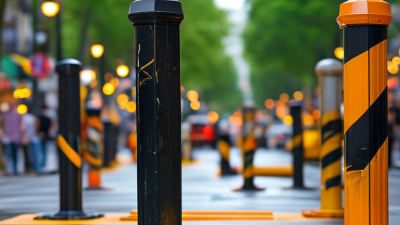
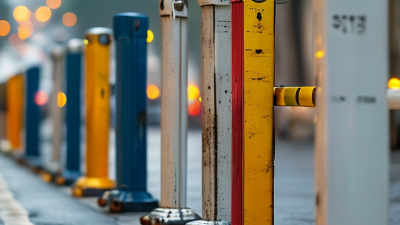
High-visibility color coating |
Contrasting colors such as yellow, white, or red can make the bollard easier to see during daylight. |
Supports pedestrian and driver awareness; allows site color coding and hazard marking. |
Paint and powder coating may fade, chip, or wear at contact points; color alone does not indicate impact resistance. |
Vehicle routes, warehouse yards, parking areas, and locations requiring visual separation. |
Ask for coating system, surface preparation, UV resistance, color reference, touch-up procedure, and warranty conditions. |
| Installation quality |
Surface-mounted base plate |
Fastened to an existing concrete surface with mechanical or chemical anchors. Performance depends on slab condition and anchor design. |
Faster installation; useful where excavation is restricted; easier to replace or relocate than embedded systems. |
Requires adequate concrete depth and strength; exposed fasteners may be vulnerable to tampering or impact. |
Existing parking decks, garages, commercial floors, and retrofit projects. |
Verify base-plate dimensions, anchor type, edge distances, concrete requirements, torque values, and load calculations. |
| Installation quality |
Embedded or in-ground installation |
Transfers loads into a below-ground foundation when the sleeve, reinforcement, concrete, and drainage are correctly designed. |
Clean appearance; can provide strong resistance to impact and tampering; suitable for permanent installations. |
More construction work; difficult to relocate; poor drainage can accelerate corrosion or damage moving components. |
New developments, building perimeters, high-risk access points, and permanent traffic-control layouts. |
Request foundation dimensions, concrete specification, reinforcement details, drainage provisions, installation depth, and local-ground-condition assumptions. |
| Safety and compliance |
Accessibility-conscious placement |
Bollards should be positioned so they do not create unnecessary hazards or reduce the usable clear width of accessible routes. |
Supports safer pedestrian movement and helps reduce trip, collision, and obstruction risks. |
Requirements vary by country, municipality, site type, and applicable accessibility regulations. |
Sidewalks, entrances, ramps, crossings, transit areas, and mixed pedestrian-vehicle spaces. |
Check local accessibility rules, minimum clear widths, detectable contrast, spacing, edge visibility, and emergency-route requirements. |
| Maintenance planning |
Drainage and corrosion-control design |
Drainage prevents standing water around sleeves, bases, and moving mechanisms. Corrosion protection must match the environment. |
Can extend service life and reduce failures, especially in wet, coastal, snowy, or chemically exposed locations. |
Drainage may be ineffective if blocked or incorrectly connected; aggressive environments may require additional protective measures. |
Coastal areas, regions using road salt, high-rainfall locations, underground garages, and wash-down areas. |
Review drainage outlets, internal water paths, coating system, stainless-steel grade, inspection access, and cleaning schedule. |
| Lifecycle value |
Warranty and spare-parts support |
Long-term value depends on documented warranty terms, replacement components, technical drawings, and service availability. |
Reduces downtime and helps control ownership costs over the product lifecycle. |
A warranty may exclude misuse, vehicle impact, improper installation, corrosion caused by the environment, or unauthorized modification. |
Large multi-site projects, public facilities, logistics properties, and installations requiring consistent maintenance. |
Confirm warranty duration, exclusions, spare-part lead time, maintenance manuals, technical support, and responsibility for installation defects. |