
Is conical rubber fender prone to aging and deformation?
Cone shaped rubber fenders are widely used as protective devices in ports, docks, and ships, and their performance stability directly affects the protective effect and service life. In practical applications, aging deformation is one of the main factors affecting its performance. This article will comprehensively analyze the aging and deformation problems of conical rubber fenders, explore their causes, manifestations, and countermeasures.
Material and structural characteristics of conical rubber fenders
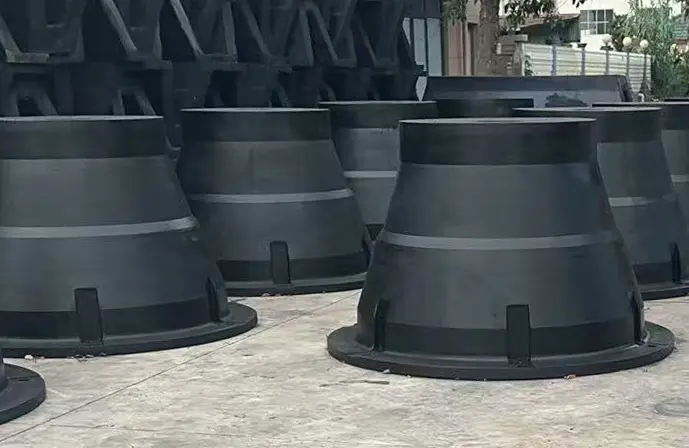
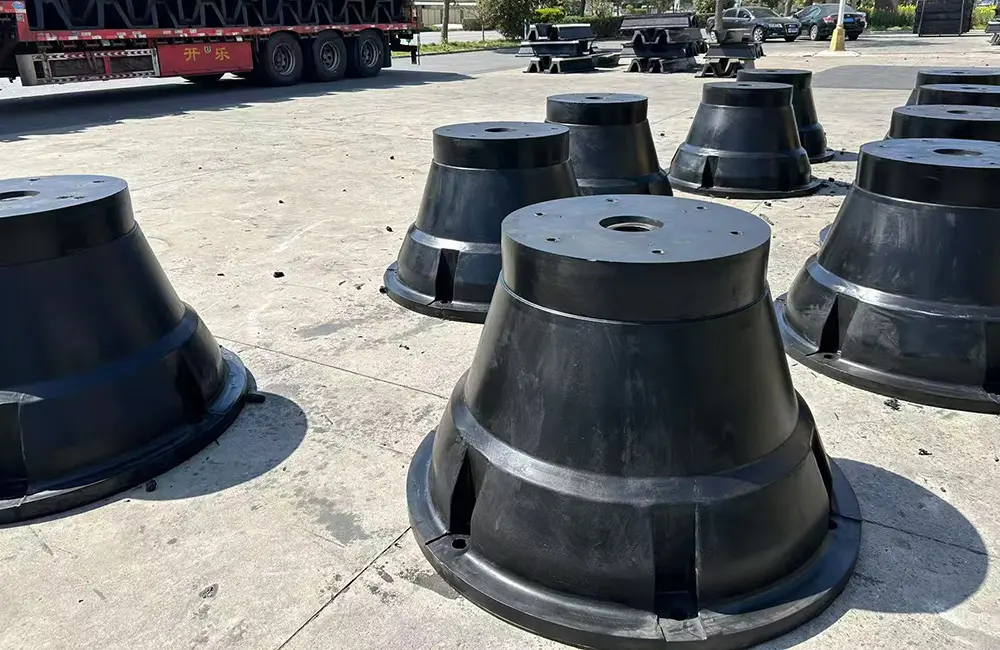
Cone shaped rubber fenders are usually made from natural rubber or synthetic rubber as the main raw material, and are produced through vulcanization process. Its unique conical structure design gives it excellent energy absorption performance, which can effectively buffer the impact force of ships berthing. This structure provides progressive compression resistance in the vertical direction and good shear resistance in the horizontal direction.
Rubber materials themselves have advantages such as high elasticity, wear resistance, and corrosion resistance, but at the same time, they also have inherent defects such as susceptibility to aging. Rubber molecular chains may break or crosslink due to various environmental factors during long-term use, leading to a decrease in material properties. Due to its relatively large surface area and wide contact surface with the environment, the conical structure is more susceptible to external factors.
The main factors causing aging of conical rubber fenders
1. Environmental factors
Ultraviolet radiation is one of the main causes of rubber aging. The UV component in sunlight can damage the molecular structure of rubber, leading to surface cracking and hardening. Especially in tropical and subtropical regions, strong sunlight can accelerate this process. Ozone is also a natural enemy of rubber, as it can cause surface cracks even at low concentrations.
Temperature changes have a significant impact on rubber properties. High temperature can accelerate the oxidation reaction of rubber, while low temperature may cause rubber to harden and lose elasticity. The salt spray environment in coastal areas can also exacerbate the electrochemical corrosion of rubber.
2. Mechanical stress
Frequent compression rebound cycles can lead to fatigue damage inside the rubber. Cone shaped fenders bear periodic loads during ship berthing, and long-term effects can cause molecular chains to break and elasticity to decrease. Uneven stress distribution can also lead to local deformation accumulation.
3. Chemical media
Salt, oil, and acidic substances in seawater can react chemically with rubber, altering its molecular structure. Common pollutants in port environments, such as fuel and lubricants, can penetrate into the interior of rubber, causing swelling or hardening.
4. Biological factors
In warm and humid environments, microorganisms and fungi may grow on the surface of rubber, and the secreted metabolites can erode the rubber material. Although mold inhibitors are often added to modern rubber formulations, long-term exposure may still face this issue.
The manifestation of aging and deformation
After aging, conical rubber fenders will exhibit various forms of deformation and performance degradation:
1. Surface changes: Initially manifested as loss of luster on the surface and the appearance of subtle cracks; As aging deepens, cracks propagate to form a network of cracks, and in severe cases, flaky peeling may occur.
2. Hardness change: In most cases, rubber will become harder and brittle, with an increase in elastic modulus; A few formulas may experience softening. The change in hardness directly affects the buffering performance.
3. Shape deformation: Long term compression may result in indentation or collapse of the affected area, causing distortion of the cone shape and uneven stress distribution.
4. Physical performance decline: Key indicators such as tensile strength, tear strength, and resilience significantly decrease, and energy absorption capacity weakens.
5. Color change: It usually changes from dark to gray white, which is a typical feature of the surface oxide layer.
The influence of aging deformation on protective performance
Aging and deformation can weaken the protective function of conical rubber fenders in multiple ways:
1. Decreased buffering efficiency: The decrease in elasticity leads to a weakening of energy absorption capacity, and more impact energy will be transmitted to ships and dock structures.
2. Uneven stress distribution: Shape distortion changes the contact area, and local stress concentration may damage the fender itself or the hull.
3. Shortened service life: Aging fenders are more prone to breakage or detachment under strong impact and require more frequent replacement.
4. Friction coefficient variation: Surface cracks can increase friction with the hull, which may affect ship berthing and disembarking operations.
5. Decreased sealing performance: For inflatable conical fenders, aging can lead to a decrease in air tightness, making it difficult to maintain internal pressure.
Technical measures to delay aging and deformation
To address the aging issue of conical rubber fenders, the following protective measures can be taken:
1. Material optimization
Choose synthetic rubber with better weather resistance such as EPDM, chloroprene rubber, etc. as the substrate
Add anti-aging agents such as antioxidants, UV absorbers, and light stabilizers
Optimize the vulcanization system to improve crosslinking density and thermal stability
Using nano fillers to enhance the mechanical properties and durability of rubber
2. Structural design improvement
Reasonably design cone angle and wall thickness, optimize stress distribution
Add protective layers or reinforcing ribs in areas prone to aging
Consider using composite structures and reinforcing materials in high stress areas
Design drainage channels to avoid accelerated aging caused by accumulated water
3. Surface treatment technology
Apply anti UV coating or use surface fluorination treatment
Use anti pollution and anti-corrosion topcoat
Develop a self-healing surface layer that can self repair minor damages
Using a dark surface to reduce UV penetration
4. Usage and maintenance strategy
Avoid being in a compressed state for a long time
Regularly rotate the fender position to evenly distribute wear and tear
Establish a regular inspection system to detect signs of aging early on
Timely clean surface oil stains and marine biological attachments
Take cover protection measures during non use seasons
Aging assessment and life prediction methods
Scientific evaluation of the aging degree of conical rubber fenders is crucial for preventive maintenance, and commonly used methods include:
1. Appearance inspection: Regularly record changes in surface condition and establish visual rating standards.
2. Hardness testing: Use a Shore hardness tester to measure changes in hardness and determine the degree of aging.
3. Mechanical performance testing: Sampling inspection of tensile strength, compression deformation and other indicators.
4. Thermal analysis techniques: Analyze changes in material thermal stability through methods such as DSC and TGA.
5. Accelerated aging test: Simulate harsh environments in the laboratory to predict the actual service life.
6. Finite element analysis: Combine material performance data to simulate the mechanical behavior after aging.
Based on these data, an aging model can be established to predict the remaining service life and provide a basis for replacement decisions.
Conclusion
The aging and deformation of conical rubber fenders is a complex multifactor process, influenced by various factors such as material formulation, structural design, environmental conditions, and maintenance level. Although rubber materials themselves have a tendency towards aging, scientific material selection, structural optimization, and maintenance management can significantly delay the aging process and extend their service life.
In practical applications, appropriate product specifications and protective measures should be selected based on the specific usage environment, and a comprehensive condition monitoring system should be established to replace them in a timely manner before significant performance degradation occurs. At the same time, the industry should continue to promote material innovation and design optimization, develop new and more durable fender products to meet the increasingly high safety and environmental requirements of port facilities.
With the development of material science and protection technology, the anti-aging performance of conical rubber fenders will continue to improve, providing more long-term and reliable protection for ships and port facilities.